Understanding The Symptom
What headaches and dizziness after a car accident may feel like
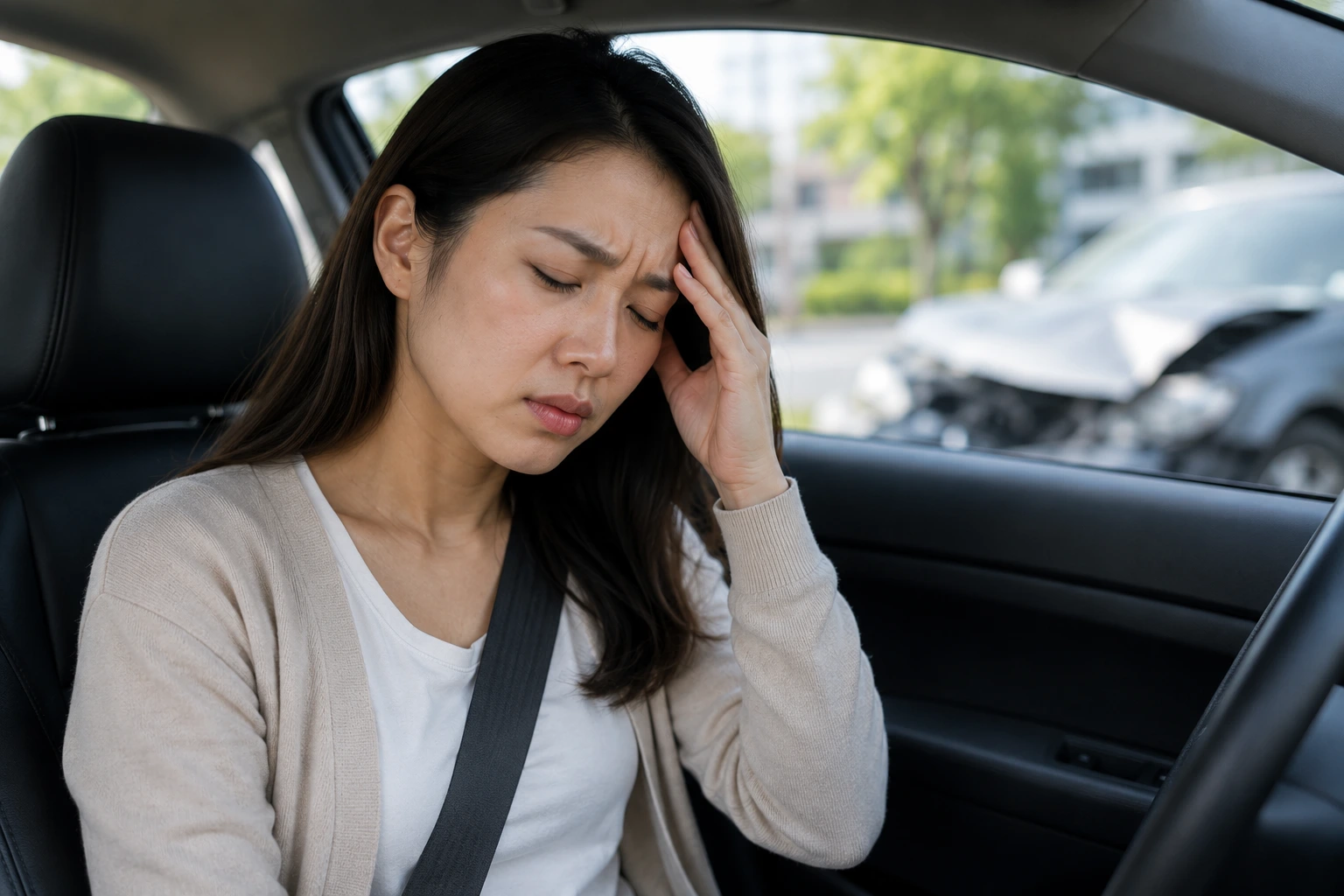
Headaches and dizziness after a motor vehicle accident can appear immediately or develop gradually over the next several hours or days. Some people feel sharp pain when turning the head, while others notice stiffness, tightness, headaches, or a heavy feeling around the neck and shoulders.
In many accident cases, headaches and dizziness may be related to concussion, whiplash-related neck irritation, vestibular dysfunction, visual strain, stress responses, or a combination of physical and emotional factors.
Common headache and dizziness symptoms after a collision
• Persistent headaches
• Dizziness or vertigo
• Light sensitivity
• Noise sensitivity
• Nausea
• Difficulty concentrating
• Fatigue
• Balance problems
Important Safety Note
When headaches or dizziness may require urgent medical attention
- • Severe or worsening headache
- • Loss of consciousness
- • Repeated vomiting
- • Confusion or memory loss
- • Weakness, numbness, or vision changes
This page is for educational purposes only and does not replace professional medical advice.
Recovery Timeline
How headache and dizziness recovery may progress after a crash
Recovery timelines vary. Some patients improve within a few days or weeks, while others require ongoing care when headaches, dizziness, balance issues, fatigue, or concentration problems remain affected.
Day 1–3
Headaches, dizziness, nausea, fatigue, or light sensitivity may appear immediately or gradually.
Week 1–2
Assessment may focus on headache patterns, dizziness triggers, balance, neck mobility, vision-related symptoms, sleep, and cognitive tolerance.
Week 2–12
Treatment may support mobility, strength, pain control, work tolerance, and return to normal activities.
After 12 weeks
If symptoms continue to affect daily function, your provider may submit a treatment plan and clinical rationale to ICBC for additional treatment review.
ICBC Enhanced Care
Can ICBC cover treatment for headaches and dizziness after a car accident?
ICBC may cover eligible treatment for accident-related neck pain and concussion-related symptoms. During the first 12 weeks after a crash, many patients can access pre-approved treatment without a physician referral or prior ICBC approval, depending on claim eligibility and treatment type.
Initial recovery window
Pre-approved treatment access may apply during the early recovery period after a crash.
Faster treatment access
Many patients can start eligible care without a doctor referral in the first 12 weeks.
Less upfront stress
Eligible treatments may be billed directly to ICBC depending on claim status and clinic process.
What happens if you still need care after 12 weeks?
After the initial 12-week pre-approved treatment period, your health care provider may submit a treatment plan and clinical rationale to ICBC if additional treatment is required. ICBC reviews each request based on injury severity, recovery progress, and clinical need.
In clinical practice, physiotherapy and counselling extensions are often approved when ongoing symptoms continue to impact daily function, although all treatment requests are assessed on a case-by-case basis. Massage therapy extensions may require stronger supporting documentation in some cases.
Treatment Options
Treatment options that may support headache and dizziness recovery
Treatment should be based on assessment, symptom severity, and the patient’s recovery stage. For ICBC-related headaches and dizziness, care may involve one or more treatment types depending on clinical findings.
Physiotherapy
Physiotherapy may help address neck mobility, headache triggers, movement sensitivity, posture, pain management, and gradual return to normal activities after a car accident.
Vestibular Rehabilitation
Vestibular rehabilitation may help with dizziness, balance issues, motion sensitivity, and confidence with movement after a car accident.
Active Rehabilitation
Active rehab may support gradual activity tolerance, balance confidence, movement tolerance, and functional recovery when dizziness or fatigue affects daily activity.
Acupuncture
Acupuncture may be considered for pain modulation, headache symptoms, muscle tension, and post-accident discomfort when appropriate after assessment.
Counselling Support
Some patients experience stress, anxiety, sleep disruption, driving-related fear, or difficulty coping after an accident. Counselling may support the emotional side of recovery.
Treatment Guidance By
Treatment Guidance Reviewed By
Registered Physiotherapist · Pegasus Integrated Health
Suggested recovery approaches may vary depending on symptoms, injury severity, mobility restrictions, emotional stress, and individual assessment after a motor vehicle accident.
Vancouver & Richmond
ICBC headache and dizziness recovery support near you
ICBC Recovery Hub connects accident-related symptom information with local recovery options in Vancouver and Richmond.
Vancouver
Aetheris Integrated Health
Vancouver West Side integrated recovery support for ICBC patients seeking treatment options after a car accident.
Visit Vancouver clinic →Richmond
Pegasus Integrated Health
Richmond-based integrated care options for ICBC patients recovering from headaches, dizziness, concussion-related symptoms, and accident-related concerns.
Visit Richmond clinic →Next Step
Not sure which ICBC treatment fits your headaches or dizziness?
Start with a simple 30-second check to explore which clinic location and recovery support may match your symptoms.
Start 30s eligibility checkFrequently Asked Questions
Questions about headaches and dizziness after a car accident
Are headaches common after a car accident?
Yes. Headaches, dizziness, nausea, light sensitivity, and concentration issues can occur after motor vehicle accidents. Symptoms may appear immediately or develop over the next several hours or days.
Can concussion-related symptoms appear days after a crash?
Yes. Some people feel dizzy right away, while others notice dizziness, balance issues, light sensitivity, nausea, or fatigue hours or days after the accident.
Does ICBC cover treatment for neck pain after a car accident?
ICBC may cover eligible treatment for accident-related headaches and dizziness, including physiotherapy, vestibular rehabilitation, active rehabilitation, acupuncture, counselling, and other recovery support depending on claim eligibility and clinical assessment.
Do I need a doctor referral for ICBC physiotherapy after a car accident?
Many ICBC patients can start eligible treatment during the first 12 weeks after a crash without a physician referral or prior ICBC approval. Patients should confirm claim status and eligibility with the clinic when booking.
What happens if my ICBC recovery takes longer than 12 weeks?
After the initial 12-week pre-approved treatment period, your health care provider may submit a treatment plan and clinical rationale to ICBC if additional treatment is required. ICBC reviews each request individually based on injury severity, recovery progress, and clinical need. In clinical practice, physiotherapy and counselling extensions are often approved when ongoing symptoms continue to impact daily function, although all treatment requests are assessed on a case-by-case basis.
When should I seek urgent medical care for headaches or dizziness after a car accident?
Seek urgent medical attention if headaches or dizziness are severe, worsening, associated with loss of consciousness, repeated vomiting, confusion, memory loss, weakness, numbness, vision changes, or any other concerning symptoms after a crash.